Homes and businesses along Port Phillip Bay and Western Port sit in salt air, and in some places sea spray. That environment can be hard on an existing solar system over time — not only the panel glass, but mounting hardware, DC isolators and connectors, inverters and home batteries. This guide explains what official advice says, what you can safely notice from the ground, and why regular servicing matters if you already have a system on the Mornington Peninsula or nearby bayside suburbs.
Solar and Battery Dr services and repairs existing solar and battery systems for homes and businesses across Melbourne. We fix solar. We don't sell it.
Why salt air matters on the Peninsula and bayside
Salt in the air, combined with moisture, can corrode metal fittings and wear down casings and seals. Properties closer to the water, or more exposed to wind off the bay, may see this sooner than a sheltered site inland. That does not mean every coastal system has a problem, but it is sensible to keep an existing system in view.
We already cover this area on our Mornington Peninsula page, including Mornington and Rosebud. The same conditions can apply to other bayside suburbs around Port Phillip and Western Port. Tell us your suburb when you enquire.
Official advice also treats coastal conditions as a recognised factor. A Standards Australia public summary of AS/NZS 5033:2021, the Australian standard for PV array installation and safety, notes that the standard includes “special requirements for installations in harsh conditions, including coastal areas.” That summary is not the full standard, and it is not an endorsement of any business.
Panels and mounting hardware
A thin film of salt, dust or debris on the glass can add to soiling, which is one reason owners on the Peninsula ask about solar panel cleaning. Cleaning the glass is not the same as checking whether the metalwork around the array is sound.
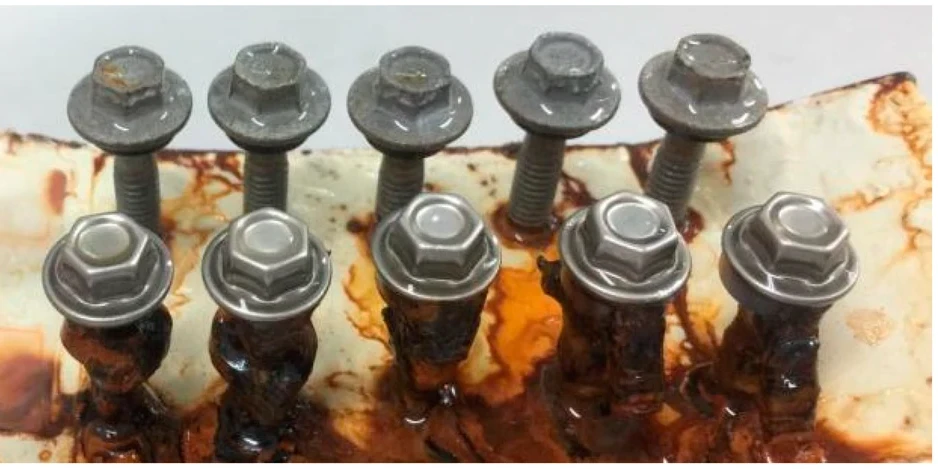
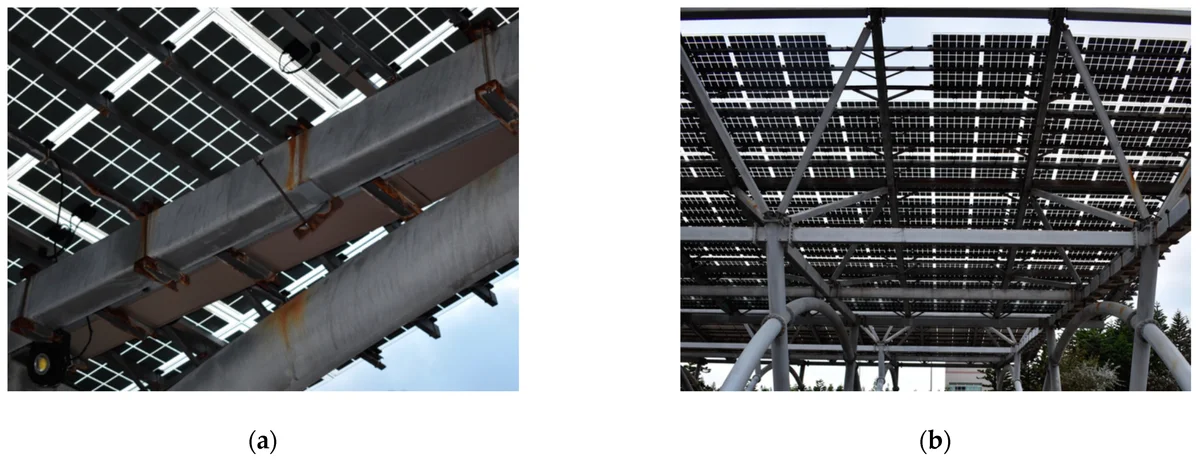
Rails, brackets, retainers and screws live in the weather for years. In a salty, humid atmosphere they can rust, stain or loosen. You may see rust staining or deteriorated fittings from the ground. You often cannot see the underside of the array, and you should not go onto the roof to look. Please do not walk on panels, and do not use a pressure hose. Solar Victoria's maintenance guide advises against pressure hoses, which can damage panels.
Energy Safe Victoria's Be solar safe advice is that a proper service is much more than cleaning panels. A licensed electrician should check that “no parts have deteriorated or corroded.”
DC isolators and connectors
DC isolators and array connectors are a particular concern in wet, salty weather. Energy Safe Victoria's guide Keeping your home solar safe (reviewed 2 September 2024) says a service should include a check and test of the DC isolator. “Over time and with constant weather exposure, the d.c. isolator casing can deteriorate, allowing rain or moisture to get into the d.c. isolator which can present a fire risk.”
That is official safety advice, not a claim about a particular brand or suburb. You should not open an isolator, a connector or any other electrical enclosure yourself. A weathered casing visible from the ground, a fault message, or a system that has stopped producing is a reason to enquire, not a reason to investigate the equipment yourself. Electrical work in Victoria must be done by a licensed electrician.
If something has already failed, see solar repairs.
Inverters and home batteries
Inverters and home batteries are often mounted on a wall, in a garage, or in another outdoor or semi-outdoor position. Salt air and moisture can affect enclosures, terminals, glands and, over time, the internals of a unit. A fault light, blank screen, unusual noise, or a battery that is not behaving as usual is worth noting from a safe place. Do not open the cabinet. For specific faults, see inverter repairs and replacement and battery servicing.
Some inverter manufacturers set coastal or salt-mist conditions in their warranty terms. Those rules are brand- and model-specific, they can change, and they are not a Victorian regulation. They should not be read as a single setback that applies to every system on the Peninsula.
For example, SMA's coastal installation declaration says there is no exact formula for distance from saline water, and that a service claim can be excluded if a listed product is installed in a higher corrosivity category without conditions that reduce the predicted salt content. Sungrow's APAC warranty terms are another example of coastal distance and salt-mist conditions, including shorter cover or a voided inverter warranty close to the coast depending on the enclosure. Those figures belong to each brand's own terms.
If you already have a unit near the bay, check the conditions for your own make and model, or include them when you enquire. Do not assume a system is out of warranty, or that it is fully covered, without reading the terms that apply to that product.
Warning signs you can note from the ground
From a normal standing position, you may be able to note:
- Rust staining, deteriorated brackets or loose-looking mounts that are visible without climbing.
- A weathered or damaged isolator casing, if it can be seen safely from the ground.
- An inverter fault message, warning light or blank screen.
- A monitoring app that shows a drop in output, or has stopped updating, compared with similar weather. See monitoring and app repairs if it looks like a communications issue.
- A battery alert, or a battery that is not charging or discharging as it usually does.
- A system that has stopped producing. See safe checks before you call for a repair.
What you often cannot tell from the ground is whether the cause is salt corrosion, a failed part, soiling, shade, or a mix. Please do not go onto the roof, and do not open any electrical equipment.
Why regular servicing matters
Energy Safe Victoria's Be solar safe advice is to have a home solar system serviced every two years by a licensed electrician. Servicing must be carried out by a licensed A-grade electrician, employed by a Registered Electrical Contractor. For extra reassurance, it says to check accreditation with Solar Accreditation Australia, the Clean Energy Regulator's accreditation scheme operator.
A service should do more than clean the panels. Official advice is that it should check that parts have not deteriorated or corroded, that switches and wiring are sound, that isolators are accessible, and that inverters and batteries are clear of debris and flammables. Solar Victoria's maintenance guide likewise says servicing involves much more than cleaning, and that the system should be professionally serviced at least every two years by a licensed electrician.
In a joint campaign published in September 2025, Energy Safe Victoria and Solar Victoria reported that, over the previous three years, Energy Safe had received reports of 138 solar-related house fires — many of them preventable with regular maintenance. That total is Energy Safe Victoria's figure for that three-year window as at September 2025. It is not a Mornington Peninsula tally, and it is not a claim about any one property. The same release is also on the Solar Victoria campaign page.
Solar and Battery Dr is licensed and insured (REC 35318), CEC and SAA accredited. We can discuss a Solar System Health Check or maintenance visit for the system you already have.
Arranging a check on the Mornington Peninsula
We accept residential and commercial servicing and repair enquiries across Melbourne, including the Mornington Peninsula and bayside suburbs. See our service areas. Holiday homes can keep running, or quietly stop, while nobody is watching the monitoring app, so include access notes when you enquire.
When you get in touch, it helps to have:
- Your suburb and the type of property (home, holiday house or business).
- Any access details you already know.
- What you have noticed: visible rust or weathering from the ground, a fault message, or a change in monitoring.
- Your inverter and battery make and model, if you know them.
We discuss your system and arrange the next step with you. An enquiry is not a confirmed booking, and we do not advertise a fixed price, a response time, or a promised improvement in output.
Ask about a health check, a service, or a repair. Call 1300 353 224 or make an enquiry.
Frequently asked
questions.
Does salt air affect solar systems that are not right on the beach?
Salt exposure varies with distance from the water, wind and how sheltered the site is. Official guidance, and some manufacturer warranty terms, treat coastal and salt-mist conditions as a factor, but there is no single distance that applies to every property. If you are unsure, include your suburb when you enquire.
How often should a coastal solar system be serviced?
Energy Safe Victoria and Solar Victoria advise having a home solar system serviced at least every two years by a licensed A-grade electrician. Coastal exposure is one reason not to put that off, but the official interval is not a special Peninsula-only rule. A service is more than panel cleaning.
Can I tell from the ground if salt has damaged my system?
Sometimes you can see rust staining or weathered fittings from the ground, or you may notice a fault message or a drop in monitoring. You often cannot be sure of the cause without a proper electrical check. Please do not go onto the roof or open equipment. If you are unsure, get in touch and we can discuss a health check or a repair.
Will salt air void my inverter or battery warranty?
Not automatically, and not under a single Australian rule. Some manufacturers, including SMA and Sungrow, set coastal or salt-mist conditions that depend on the model and the site. Check the terms that apply to your own make and model, or include them when you enquire. Those manufacturers do not endorse this business.
Is panel cleaning enough in a coastal area?
No. Cleaning can address soiling on the glass, including salt film, but official advice is that servicing must also check for deterioration, corrosion and the condition of isolators, wiring and other parts. You can ask about cleaning and a Solar System Health Check in the same enquiry.
Do you service existing systems in Mornington and Rosebud?
Yes. The Mornington Peninsula is part of our Melbourne service area, including Mornington and Rosebud. Tell us your suburb and the service you need so we can discuss the next step. We look after existing systems. We do not sell new installations.
Solar not working?Call us today.
1300 353 224Ask about a health check, a service, or a repair. For solar and battery servicing on the Mornington Peninsula, call 1300 353 224, or make an enquiry.
Hours: Monday to Friday 7:00am to 5:30pm. Saturday 8:00am to 3:30pm.